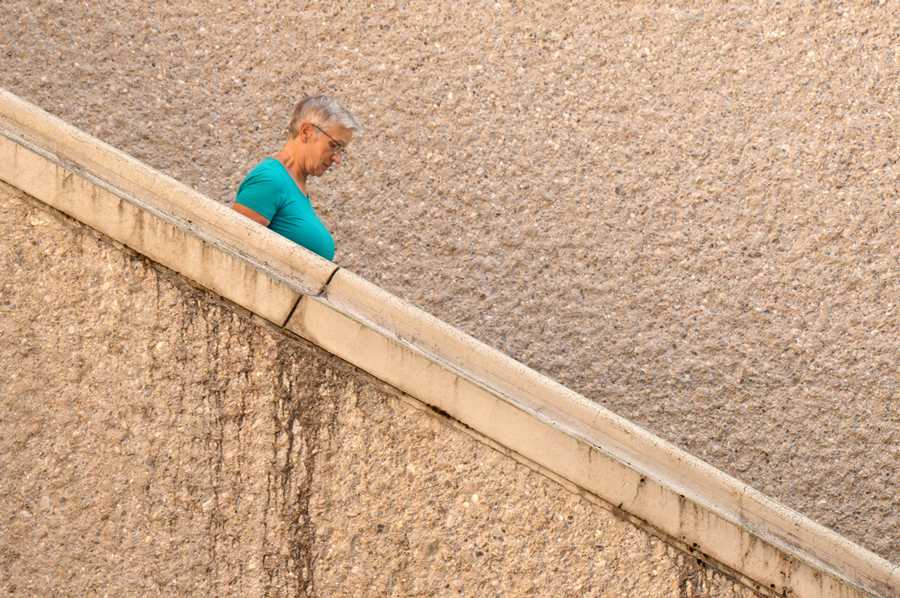
People in the picture change everything.
This is simply because we humans are particularly interested in other people. They practically draw our gaze like a magnet. Even before all other subjects in the image: What matters first and foremost is the human being
Many rules of visual language are turned upside down when people are in the frame. Human behavior is simply too distracting and sometimes gives the image an entirely new meaning.
In this recording, the rule still applies that we read from left to right and analyze the images in the same way. The left is the past and the right is the future. The rule of top and bottom also still applies.
Every viewer sees that this person, it is my wife, is going from top to bottom. This is shown primarily not by the course of the stair railing, but crucially by the gaze and posture of the depicted person.
By the way: Politicians who are dismissed, as happened this week, are shown in the press with this kind of picture for the last time.
Left and right are swapped.
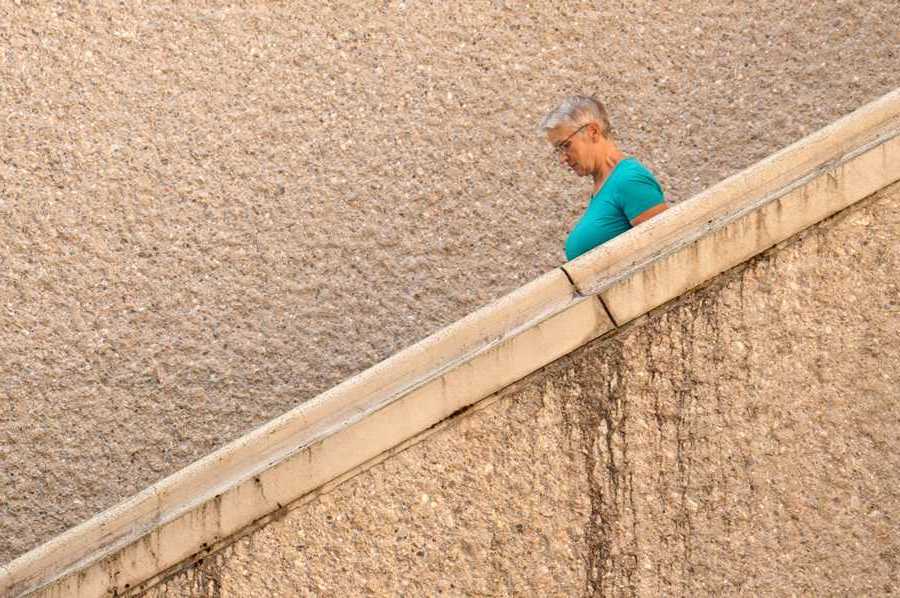
As already mentioned, one might think the railing in the image runs from bottom-left to top-right. However, the line of sight and walking direction of a single person clearly determines: Here, a person is walking down the stairs. From top-right to bottom-left.
By the way: It is the same image as above, just horizontally mirrored on the PC.
The optimal visual message
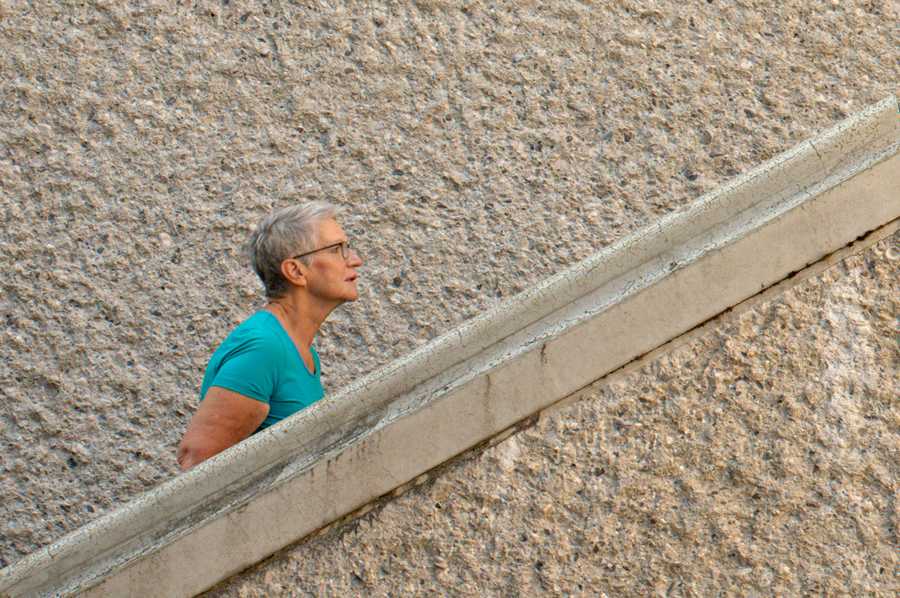
In this picture, the usual rules apply again. From bottom left to top right.
Ascent. Positive. Growth. Like ideal corporate revenues and rising stock prices.
Portraits at eye level
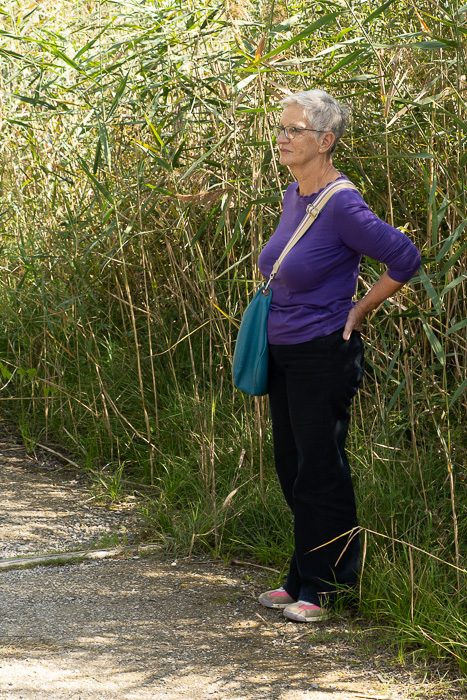
It is written that most pictures that are taken are thoughtlessly taken simply from eye level. This is the perspective we are accustomed to on a daily basis. There is nothing fundamentally wrong with that at first. In the case of portraits, this is even to be strived for, because any change in perspective in the vertical direction has specific consequences. Often a slight change in the shooting position is enough to create a new, unusual image.
Portraits from an elevated position
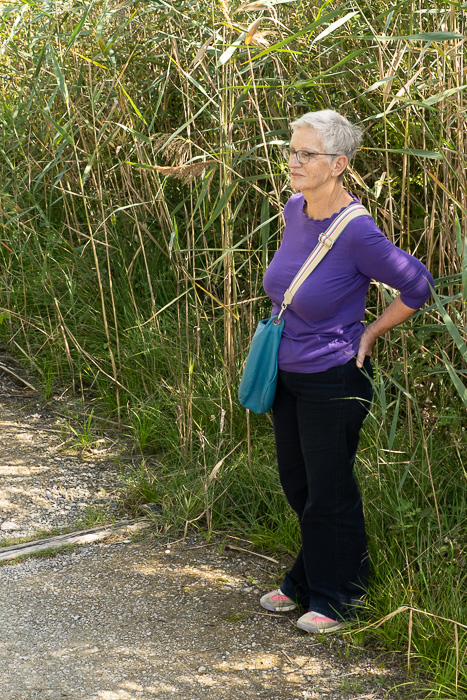
Portraits from an elevated position make the person appear smaller. At least the visual effect is that they are compressed. The shapes become rounder. The person appears smaller, weaker, more dependent. This can be used consciously or unconsciously by experienced photographers.
Low-angle portraits
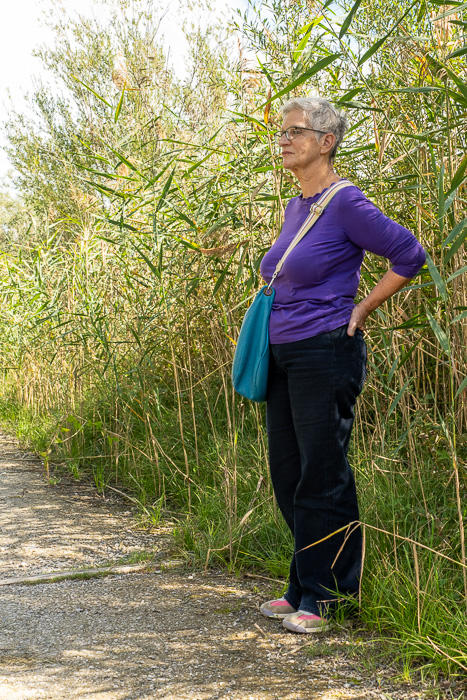
This shooting position was not from an extremely low angle. Squatting down just a little results in a completely different visual language. You can feel that the person in the picture appears overall larger, more powerful, stronger, more superior, etc. Pay attention to this in the future: politicians like to be photographed in this position! It makes them look taller than they actually are.