Expression leaves an impression
I think it's already been 20 years. I'm sitting at the PC as I so often do, and suddenly a spam email comes in. Some copywriter was offering me his services. He said he could create excellent and persuasive advertising texts that would convince my customers so cleverly that they would ultimately buy from me online. The trick was just to turn words into money.
Of course I don't respond to such spam emails. But his subject line, his hook, is still vividly remembered by me to this day. It is, so to speak, my daily mental companion.
And here regarding the topic of visual language, it fits like a glove: Expression makes an impression.
And indeed: Whether Udo Jürgens sings his song „Griechischer Wein“ or the Beatles sing „All you need is love,“ the message of these songs makes a powerful impression on the listeners.
A lawyer who can express themselves very well verbally in court appears more convincing before the judge than a mediocre or even bad lawyer.
Every speaker who knows their craft and comes across as persuasive captivates the audience and is more successful than a bore.
We photographers also differ in the quality of our expression. We do not speak with words, not with songs, not with sculptures, but we express ourselves visually with pictures. The more impressively we achieve this with photos, the deeper is and remains the impression we leave on the viewer.
Also for our photos: Printing makes an impression.
How it all began: Jonathan Livingston Seagull
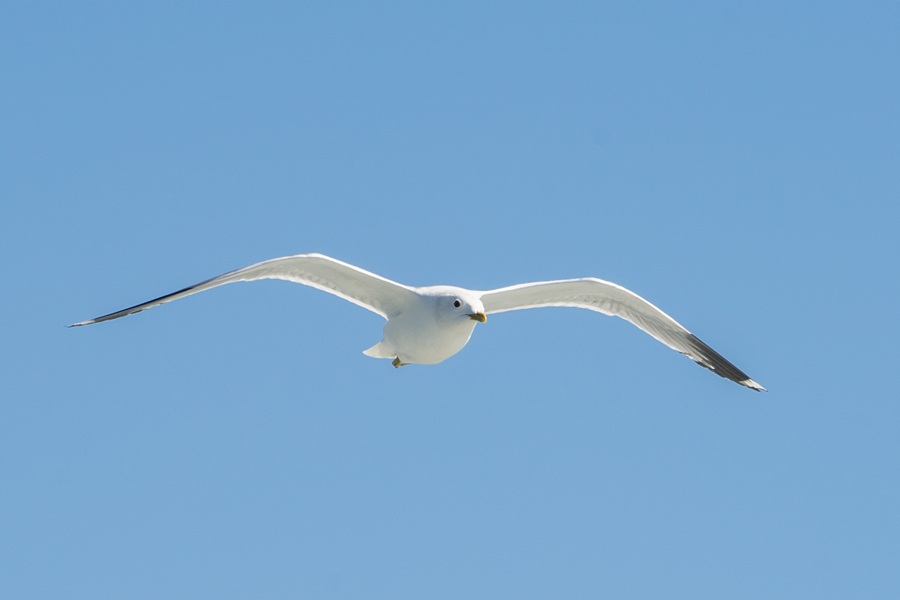
„Jonathan Livingston Seagull conveys that personal growth occurs when one has the courage to question one's own limits and to tread new paths. Jonathan follows his passion for flying, even though he experiences rejection and exclusion for it. He realizes that true freedom comes from learning, practice, and the unfolding of one's own potential. Instead of being bitter, he passes on his knowledge to others and inspires them to transcend their own limits as well.“
On my photographic journey, I feel like Jonathan Livingston Seagull.
My membership here in the local photo club was not fulfilling for me.
Running after the pack to find recognition is not for me.
I refuse to do what everyone else is doing.
Photographing for others or for exhibitions is secondary.
My path leads inward first:
What do I want?
What is MY style?
What fulfills ME?
With a lot of trial and error: Photography just for the sake of photography.
Play, without wanting to please.
Lifelong learning.
I am fascinated by what is written about Jonathan Livingston Seagull: She is consciously distancing herself from the crowd, which scream and scuffle over a few leftover fish from the fishermen and content themselves with fish scraps. She deliberately isolates herself in order to unintentional Learning to fly, being able to dive, mastering sleep in flight, etc.
Right up to mastery. The pure being of a gull had always been her ideal.
And lo and behold, after an infinite number of failed attempts and hard crash landings, she learned to dive. To dive deep. All the way down to the bottom, where the precious, delicious fish swim.
This is how Richard Bach wrote it back in 1970 in his story.
Scream loudly!
Konstantin Wecker: „The loud ones aren't always strong, just because they are loudmouthed.“
„It is not always the loud who are strong, just because they are loud.
There are so many whose lives quietly succeed much more genuinely.
They don't stand on stages, they don't fill the arts and culture pages,
they are fighting on harder grounds…“
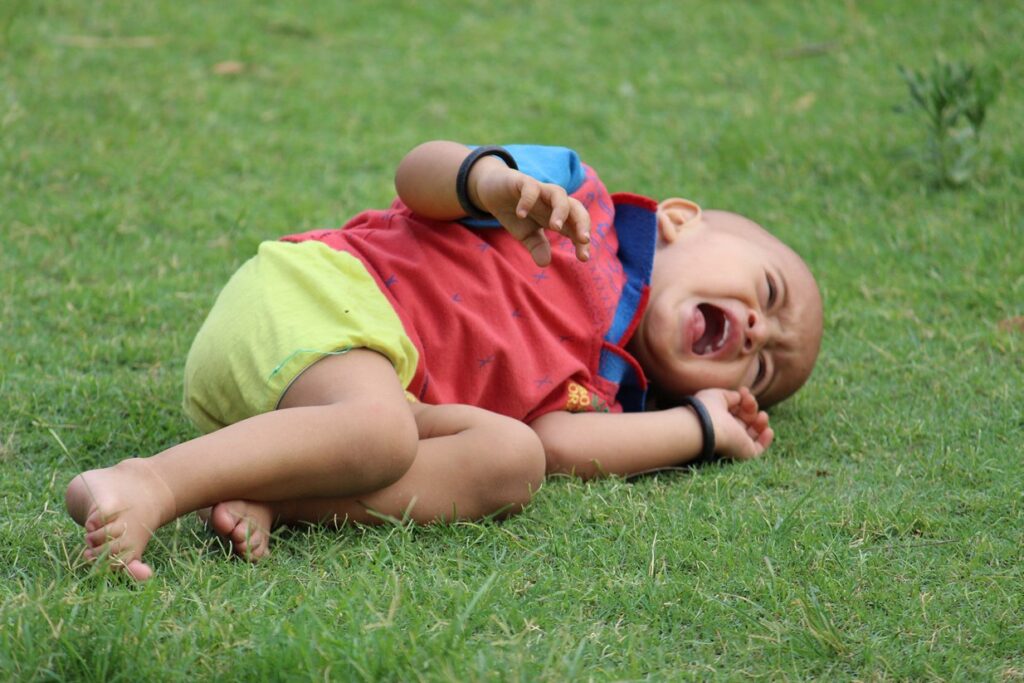
Every child can already communicate when they come into the world, even if the first sounds are just crying. Hard to understand.
And it seems to me that at the beginning, all photographers follow this principle: loud, flashy images of sunsets, sunrises, blue hour, macros, flowers, butterflies, etc. The main thing is that it's loud. The main thing is that it's flashy. With the usual photo contest rules: „Who screams the loudest?“
But that is not visual communication. Neither verbal nor visual. It's just loud.
bla bla bla

And just like children who slowly develop their communication with the environment over the years, we photographers do too. Crying out loud gradually turns into blah blah blah. The usual photographer murmuring: butterflies, Grand Canyon, Niagara Falls, exotic bonus, „I was there“ pictures, fog, dew drops on spider webs, etc. Wherever you look, just the usual photo kitsch and clichés. Not for me. Not that I think I'm anything special. No, I just want to be ME and not an anonymous, interchangeable, adapted, and well-behaved member of some insignificant photo community.
Yet the photo-blah-blah-blah is like with young children, still not proper, not understandable communication. With children, I am quite sure, communication gets better, clearer, and more understandable over time. Their vocabulary grows daily. Their sense of proper grammar does too. And with lawyers, linguistic fluency is even extremely pronounced: expression makes an impression. That is also my goal as a photographer. To communicate perfectly.
David Ulrich Professor of Photography at a completely normal American college writes about this in his book: „Conscious Photography“: “Many pictures are today purely picturesque, without substantive depth. Many photographers want to achieve maximum impact with their images or simply take beautiful or visually appealing photos. This is one stage on the learning curve, which, however, can be quickly overcome – and should be overcome.“
And then he gets to the point: „Photography is a powerful means of communication, and many people are visual Stereotypes weary of, which predominate in popular photography.“
And he asks us very earnestly: „What do you want to say? How do you see the world? Which ideas and impressions touch you deeply?“
Communication is for him and for me, although I have never met him in person, the actual purpose of photography. With this conviction, however, I did not find any kindred spirits in any photo club of which I was briefly a member. A pity, really. The word Imagery I have never heard that there.
And just as children learn human, linguistic communication more and better with each passing year, as a photographer I too want to learn, understand, and apply the elements—so to speak, the „words of visual communication“—ever better. Unfortunately, I have to do this alone.
And of course, I also have to and want to master the grammar—meaning the composition of the elements of visual communication: making pictures that convey a message—the high art of photography. Everything else is just snapping pictures to me. And that's completely fine: to each their own.
Of Roses and Dirt

Somewhere I once read: A sweet fragrance remains on the hand that gives roses.
I am expanding the sentence: An der Hand, die mit Müll und Dreck um sich wirft, auch.
In almost all photography textbooks, it says that every picture also tells something about the photographer states. It says something about the author, whether he publishes positive, beautiful, encouraging, cheerful images or just dirt, garbage, trash, negatives, murder and mayhem.
Henri Cartier-Bresson „We do not see the world as it is, we see the world as we are.“
Ansel Adams: „In every photograph, there are always two people: the photographer and the viewer.“
Ernst Haas: „There is always only you and the camera. All limitations lie within yourself, because what we see is what we are.“
Minor White: „A photograph is always a self-portrait, no matter whom or what you photograph.“
The core of all these statements is that the choice of subject, perspective, light, and the moment the shutter is released are strongly guided by one's own values, experiences, and inner feelings.
This does not apply only to us photographers: poets, novelists, newspaper editors, filmmakers, theater directors, sculptors, and all creators of art as well: By their fruits you will know them. As within, so without.
I have an acquaintance who starts most sentences with: Yes, but the problem is!
Or as my closest childhood friend always says: Now he's voting for that one party too, they've got the right problem for every solution.
And to put it very drastically: What should be written on our gravestone one day:
„He was a Rosenkavalier“ or „There he lies now, the defeatist.“
Statements, statements everywhere statements
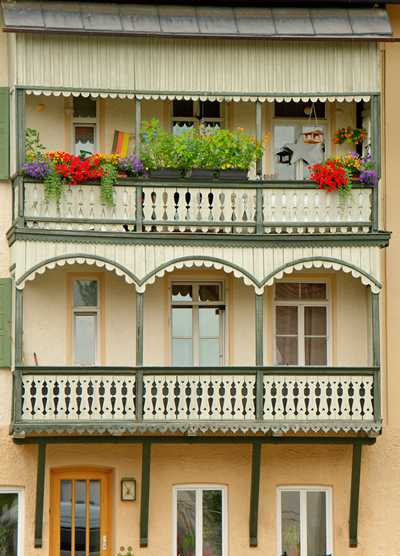
Seemingly a „completely normal balcony“ in Wolfratshausen. And yet it says something about the residents behind the balcony. So to speak, the individual balcony language.
Up above, the balcony is colorful, diverse, vibrant, decorated, full of life, etc.
The balcony downstairs is empty, austere, utilitarian, undecorated. That, too, says something about the residents. Perhaps real people live upstairs and downstairs is just a balcony in front of an office. That's possible. But it says something!!
And I mean all of this without judgment. To each their own. But it does say something. It expresses something.
Everything expresses something: How we dress as human beings. How we walk: Upright or hunched over. Quickly and purposefully or slowly and mincingly. Which car we drive. What profession we have. How we live, where we live, what relationships we enter into, what we eat, how our apartment is furnished, internally and externally, etc. Everything counts. Or as I once read: We CANNOT „not communicate.“ Even if we lie on the sofa at home all day, that says something about us. Everything counts.
Just as all the pictures we photographers take also have a visual message. That is why mastering visual language is so important.
Anyone who converses (communicates) with the locals in Italy must master as many Italian words as possible and, of course, the grammar of the Italian language.
Therefore, a good photographer must also master as many elements (words) of visual communication as possible. His pictures say something about him. And the viewer should recognize this as well. Then he is a master of his craft.
Resonance, or what on earth am I supposed to photograph?
- How many words and sentences do you speak daily?
- How many words and sentences do you write daily?
And it doesn't matter what your answer is: In any case, that is quite a lot of words.
And honestly: Is everything you talk about every day in perfect German? And if you have to write a lot at work: Are all your texts worthy of the Nobel Prize in Literature?
If not, and I am assuming that is the case, how on earth do you get the idea that your photos, of all things, have to be perfect, beautiful, unique, and sensational.
I’d guess that 99% of all the photos you see every day in the mass media—such as TV, the Internet, etc.—are the kind that make a „visual statement.“ A minister is being fired. The editorial team selects the appropriate image to go with the story. No picture of morning fog and sunbeams. No sunset. No photo from his last vacation. An image that conveys the message: He’s stepping down. That’s it. The end, period.
The so-called „pretty pictures“ in photo clubs are a very rare exception. All other pictures are normal memories of a vacation, child's baptism, celebrating together, a bike trip, etc. In other words, pictures with a message.
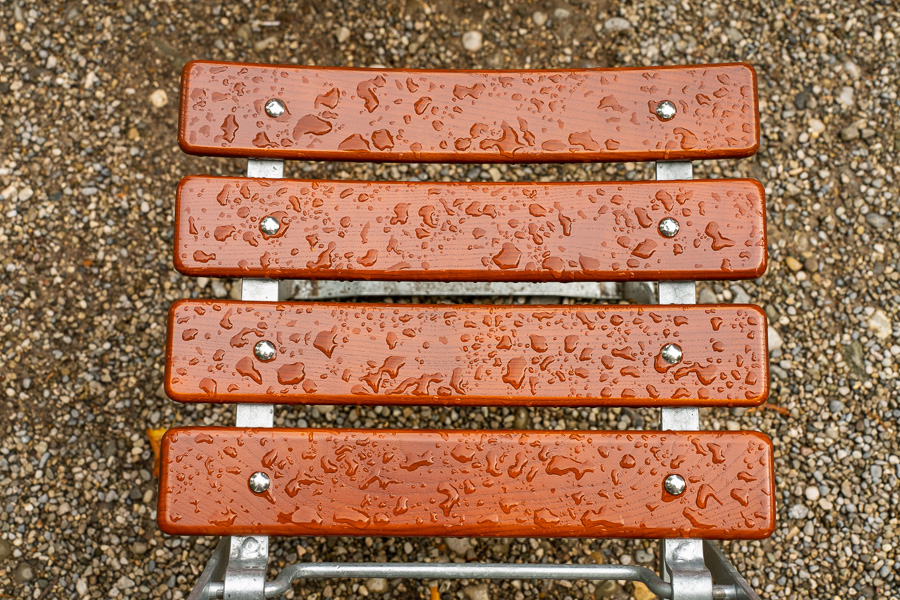
After many days without rain, today it was worth it to me to take this „picture of wetness.“ Nothing more. Without competing for the „picture of the year“ here in the photo club. This subject appealed to me. Resonance. Nothing more.
This attitude vastly expands your range of possible photos. If you are only looking for „pretty pictures,“ that will restrict you. Unnecessarily restrict you. If you are constantly searching for the photo of the year, your view of what is actually possible becomes narrowed.
Minor White (1908–1976) was an influential American photographer, art theorist, educator, and co-founder of the renowned photography magazine Aperture. He taught his students: Seek resonance.
Minor White's teaching approach was based on this exact core principle: he taught his students not simply to document subjects, but to search for visual equivalents for inner states.
That brings us back to the topic: As within, so without. Every image says a lot about the creator. So go out there (preferably daily) and photograph everything that personally and individually appeals to you. And show it off. The world is not waiting for the billionth picture of a sunrise. There are already more than enough of these types of images. Countless and from the most beautiful places on Earth.
But nobody has ever expressed your local perspective quite like you have. That is what counts. That is what the people around you want to see. Show yourself. Take courage. You literally cannot do anything wrong. Your opinion is your opinion. And over time, your images will become more and more accurate. With every element of visual language you use, your statement will become better and more understandable. And that is all that counts.
Ted Forbes writes in his book, „The Language of Photography“:
„What should you photograph? Where do you start?“
And after these questions he also gives an answer:
„With what I know today, my first reaction would be: »What do you mean, you don't know what to photograph? That's photography – a real gift!" Be proud of your surroundings, the place where you live! That is what you can show the world, instead of not seeing the forest for the trees!“«
From waterfalls, soloists and well-behaved choir members
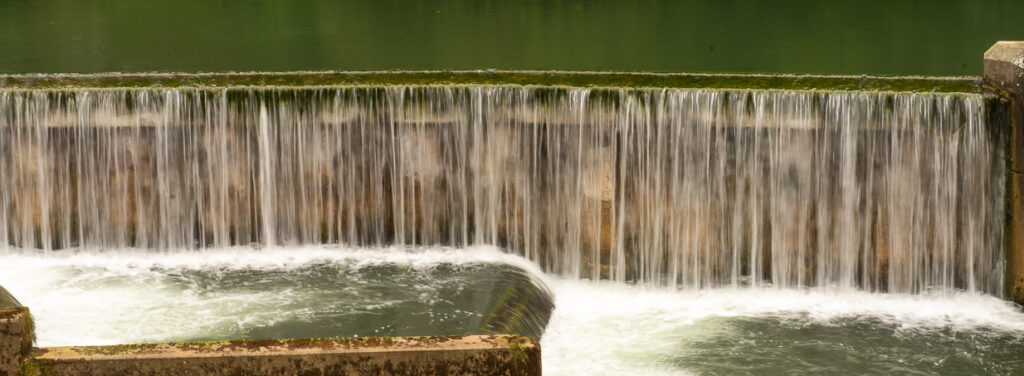
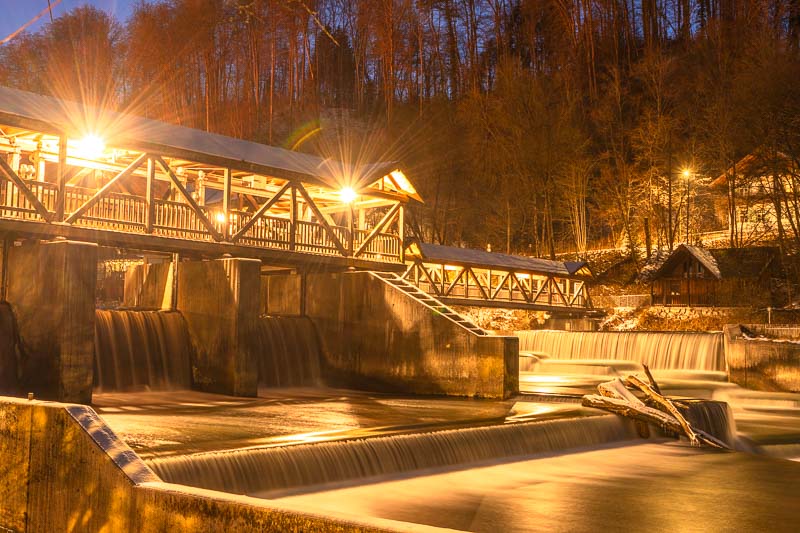
Please search the term "Waterfall" using an internet search engine. As a result, select images instead of web pages. Then you will immediately understand what is meant by this image caption: From waterfalls, soloists and well-behaved choir members what is meant. It feels like the first million pictures are all the same. All of them were obviously created with a tripod and as a long exposure. No one dares to show the wild, roaring, surging, splashing nature of a waterfall as a visual statement.
In art and photography, you have to decide:
- Do you want to submerge and hide in the mainstream choir with your pictures, or
- Do you want to stand out from the crowd, take risks, and even ruffle feathers if necessary.
If you adapt, you are sure to get more likes, more validation, more pats on the back. That is the path most photographers take: adapting to the average taste in internet forums or at the club.
But at the same time, you lose an extreme amount: Your own self-respect. Your individuality, which was given to you at birth. Your freedom, tension in your images that reflect your own voice.
And yes, it is easier and less exhausting to swim with the current your entire photographer's life. But Only those who swim against the current reach the source.
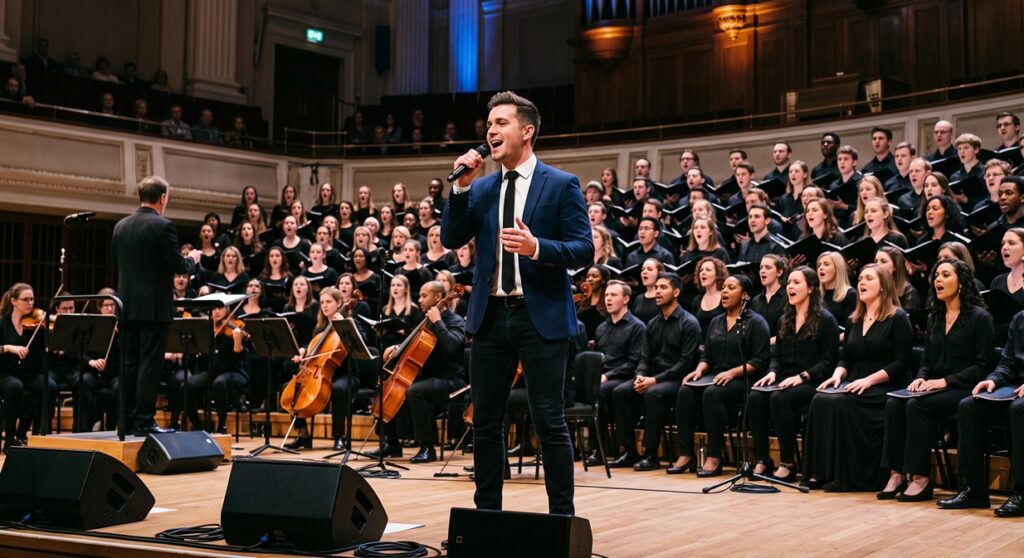
Image: AI-generated (Gemini) – The persons shown are synthetically generated and do not represent real individuals.
Do you think that Udo Jürgens, if he had only sung in a choir, would have been just as great? Rather, he did his own distinct thing. He wasn't a conformist. He dared to do things. He even packaged serious and socially critical themes into headlines and turned them into music. He did what he thought was right and did NOT simply run after the mainstream. He followed his own voice and raised it loudly as well.
That is precisely what defines strong photography: the courage to have your own signature style. Those who merely sing along just to avoid causing a stir remain interchangeable. The „soloists,“ on the other hand, leave a lasting impression.
Even Pablo Picasso knew that true art begins where you stop trying to please everyone.
Whoever photographs just to reap applause ultimately delivers only what people want to hear or see. That is then nothing more than decoration or entertainment, and only rarely true creative power.
The great pioneers of photography all did and still do their own thing. They are driven from within. They want to show their own vision to the outside world. Applause or not, they don't care.
When it comes to waterfall pictures, this means: Many snapshooters, in fact most of them, want the safe applause for the pleasing silky water. A true „soloist“ would stand there and capture the spray and chaos unadorned, even if they get fewer hearts on Instagram.
And as a choir member, Frank Sinatra could never have sung: „I did it my way“
The fact is, however: You have a voice. Your own voice. A visual voice. That is what this is all about. So: Speak, sing, take photographs. Because if you don't do it, no one will do it like you.
The end of the „beautiful pictures“
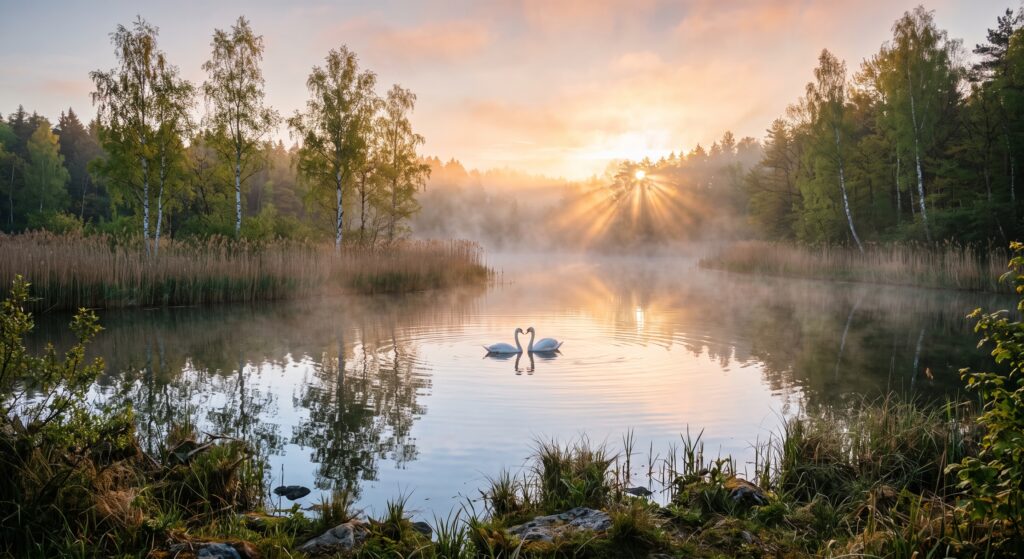
Image: AI-generated (Gemini)
All photographers who are not yet addressing the topic of visual language and are not yet engaging with it will be out of work soon anyway. They basically are already. AI can do it better, more beautifully, and faster than we ever dreamed.
Anyone who needs a nice picture for their wall can have it in 10 seconds if desired. Anyone who needs a nice calendar can have it in 13 times 10 seconds.
Trilogy
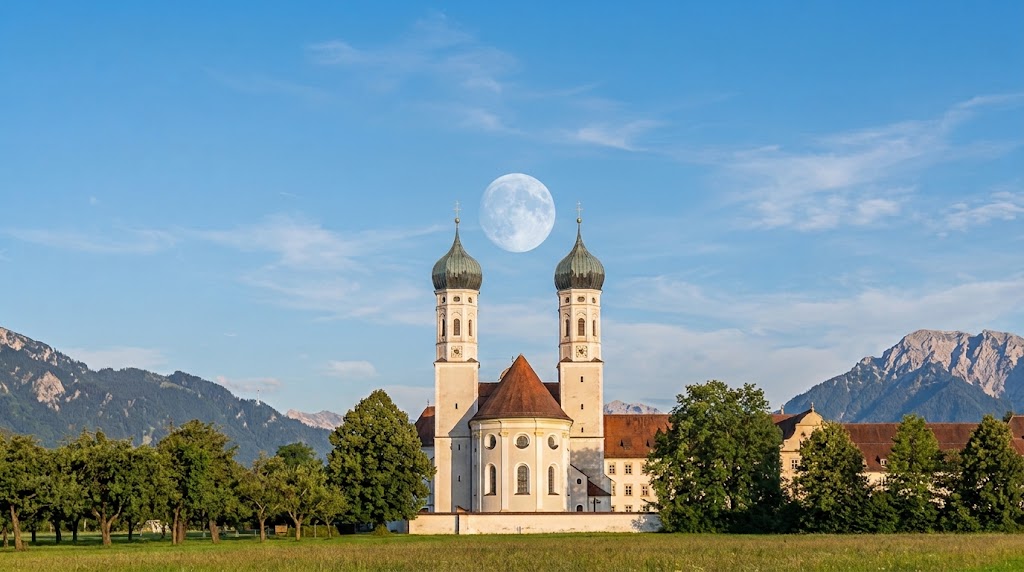
Trilogy Part 1
The first question we photographers ask ourselves over and over again is:
What do I want to photograph, or rather, what do I see in the outside world that interests me internally, mentally, and intellectually to such a degree that it is worth a photo, or at least the attempt at one? Why does the subject in front of my lens resonate with me so deeply that I want to engage with it? What does it have to do with me? What do I personally want and am I able to express with it? Because obviously, it leaves other photographers cold. They walk right past it without a second glance.
And no highly philosophical, depth-psychological analysis is needed here. Anyone who goes through their own life with a bit of mindfulness notices anyway which motives interest them and which do not. Are they portraits, pictures of children, vacation pictures, butterflies, the home town, the home region, etc. Whenever something appears that interests us, appeals to us, we raise the camera to our eye or hold up the cell phone and click.
Trilogy Part 2
The second part of the trilogy concerns the skillfully crafted or masterful execution. Which shutter speed suits the subject, which aperture (depth of field), which ISO setting, white balance, focal length (angle of view), which composition, portrait or landscape format, where is the focus, color or black and white, what absolutely must be included in the image, what must not be included, etc. How can I best implement my intention to express something through the image from a craft perspective?
Numerous perfect and comprehensive textbooks have been and are still being written about these craft skills, along with their respective significance and settings.
This is also where your artistic ability and talent come into play: What do you want to convey with the photo, how is best to achieve that, are you just taking a snapshot in passing or do you spend 30 minutes on this subject? Do you approach the best possible execution through trial and error? How quickly do you give up, or how stubbornly do you stick with it?
Trilogy Part 3
If you believe that after many attempts on site, from all possible angles, you have taken the best version, the best possible photo, it's time to head home to the PC with the large monitor to post-process the images or rather the best image a bit. Now you use the numerous sliders of modern image editing software so that your intended message comes into its own most strongly.
General communication
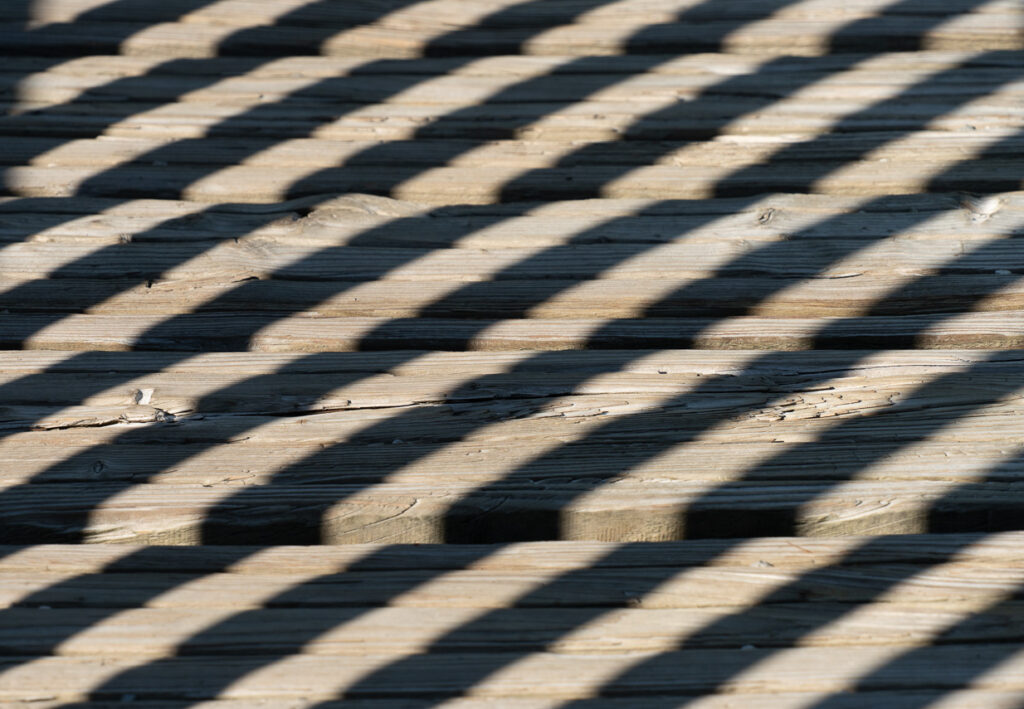
You know the saying: „Talk is cheap.“
And that is a good thing and apparently has to be that way among us humans. Not everything we say (communicate verbally) is in perfect German. Not everything consists of well-formed, well-thought-out sentences, brilliant with verbal wit and eloquence.
Much of what we just chat about consists of quite mundane topics. Much of it also repeats almost daily. That is also completely fine.
What I mean by that: Even we photographers, who communicate a lot or almost daily with images, don't only have Nobel Prize-worthy shots. That wouldn't even be possible. Anyone who goes to work every day and takes photos as a hobby on the side cannot deliver pictures of polar bears from the Arctic, sunsets behind the Matterhorn, or glaciers from the Himalayas every single day. And one's own hometown doesn't yield that many brilliant and sensational images on a daily basis either.
Possible solutions: We take few or no photos, or we simply take photos of mundane things sometimes. Just as we talk about a lot of mundane things. (communicate)
Not every shopping list that we write, not every email that we send, is suspected of winning the next Nobel Prize in Literature. Not every text that we write has to be deeply psychological and highly philosophical. Many banal texts also leave our PC at the workplace. And that is okay, too.
Here is the consequence here too: Not every picture we take has to be the most beautiful picture in the world. Of course, we do our best. But much of it is simply the gray everyday life. We should accept that and make the best of it. Anyone who does NOT take photos out of fear of negative comments is forgoing visual communication for no reason. Later on, you are guaranteed to regret it. It is nice to look back at your own pictures from past times.
Let us take Pablo Picasso as our role model: I do not paint for applause.
The AI recommends that I use the following sentences for this topic:
- „I don't take photographs to be praised. I take photographs because I have something to say.“
- „Art does not arise from the desire for applause, but from the need to express something.“
- „If my painting is only worth something when others praise it,
I have relinquished control over my photography.“ - „Do we actually take photographs for ourselves - or for the reactions of others?“