The right light for old, abandoned, and decaying
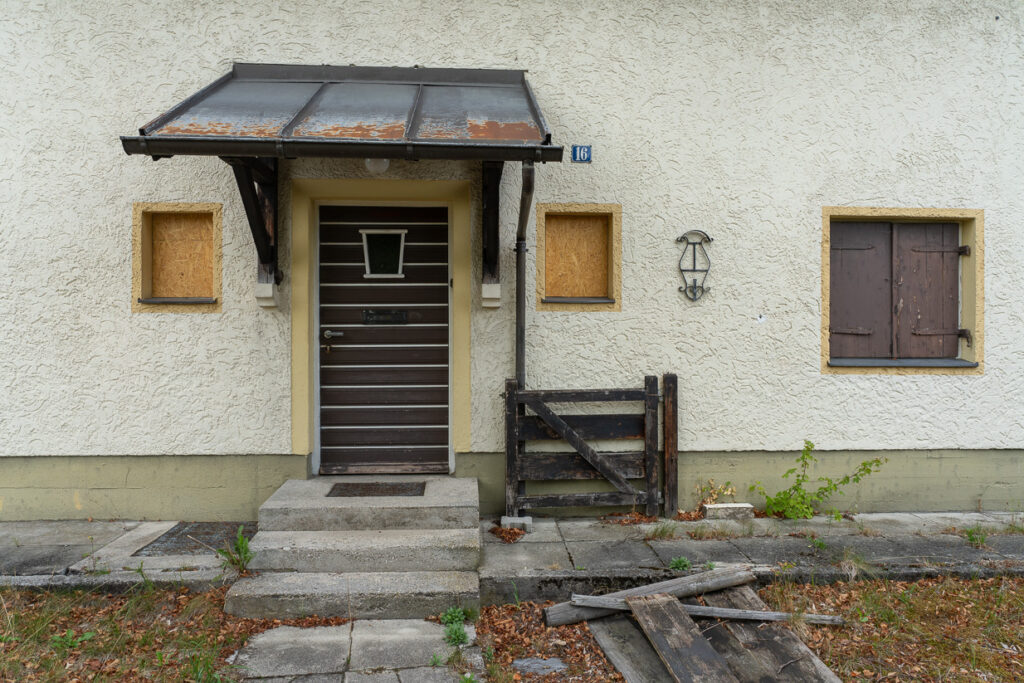
In my immediate neighborhood, there is a somewhat older house. The residents moved into a nursing home 2 years ago. Since that time, the house has been abandoned and is visibly falling into disrepair. So far, so good. Actually nothing special, this happens in every town or city multiple times, over and over again, and is an everyday occurrence.
As for me personally, I could actually care less. But since I met the residents on the street and as I walked past almost every day, I a small relationship to the house.
Therefore, I had been thinking for a long time about how to photograph this old, abandoned subject so that the viewer recognizes: An old, abandoned house that is slowly decaying.
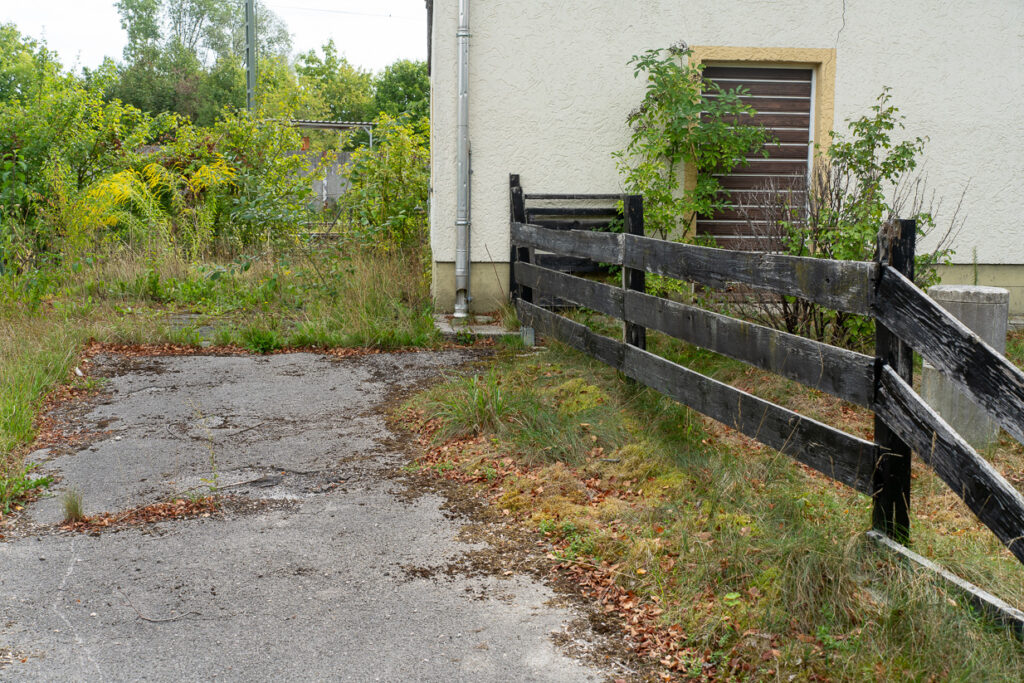
Bright sunshine doesn't fit. Blue sky doesn't either. And setting the photo editing sliders to colorful, bright, friendly, and optimistic isn't appropriate either. That's why less contrast, less light, etc.
I will continue to monitor the condition of the house. I have no other choice anyway, as I pass by it almost daily.
How it all began!
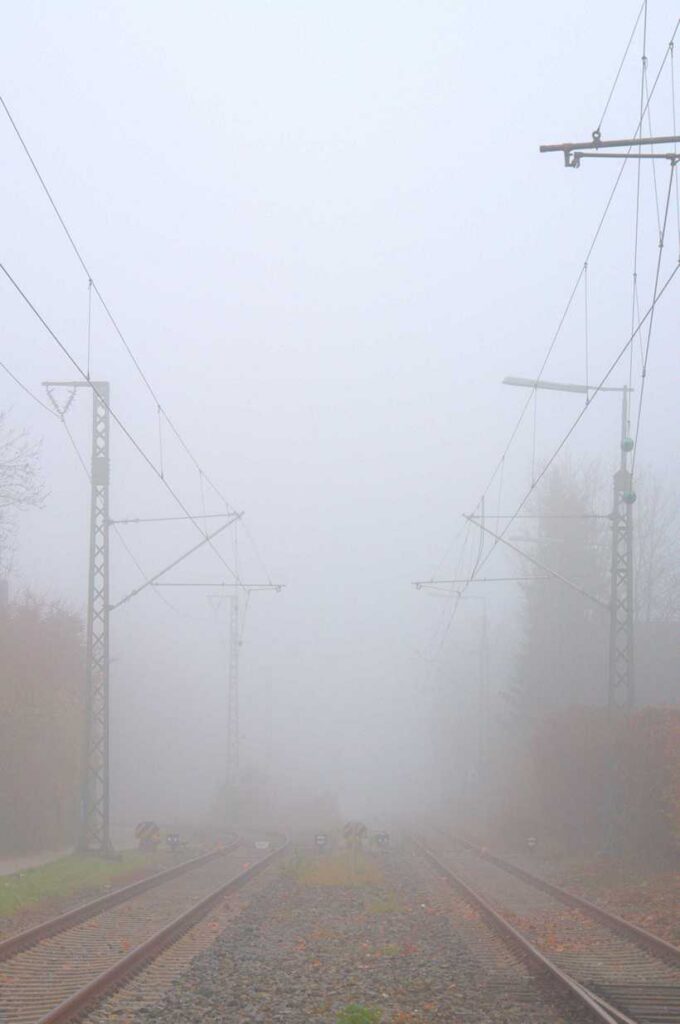
Here is my first picture, which, after countless confusions and attempts with light and shadow and colors and beauty, I deliberately photographed with the resolution: „Now I'm finally going to make a picture with a message.“ I briefly visited two photo clubs nearby. And at both of them, the word Visual language is a foreign word. So I had to read a lot until I discovered this photographer topic.
Important: Not just a trivial foggy picture with trees, water, animals, landscapes. The crucial thing about this fog picture is the tracks, which portray the path into the future as uncertain, fogged over, enchanted, or obscured. A road would have conveyed the same message, but none was available at the time.
As a check, my wife had to guess afterwards what I could have meant by it:
Bullseye: She said the picture shows an uncertain, unclear, invisible future.
10,000 hours

The Canadian journalist and non-fiction author Malcolm Gladwell writes convincingly in his book „Outliers: The Story of Success“ that 10,000 hours of deliberate practice are necessary to achieve absolute mastery.
As an example, he cites the Beatles, among others. He describes that the Beatles were not in Hamburg for just three short concerts, but performed there for many months and many nights three times.
At 2 hours of photography and one hour of post-processing at home on the PC every day, this adds up to 300 x 3 = 900 hours per year. That means almost 10 years of 3 hours a day to achieve mastery in photography.
The well-known German-American photographer Lisette Model (often also Lisette Model written) is said to have once said: Never photograph anything that does not interest you. She meant that true passion and personal interest are the absolute prerequisite for a good and authentic photo.
You should feel the same way. If your photo club sends you out with the assignment: photograph the blue hour, the awakening of spring, bridges, the color blue, or similar nonsense, then have the courage, in your own interest, to say NO. Why?
- 1. Never photograph anything that doesn't interest you.
- 2. It takes 10,000 hours of training to truly master something.
- You are wasting pointless lifetime, the most precious asset you have. If others want pictures of the blue hour, they should take them themselves